2023
Bonding Across Distances
Building social presence with mixed reality for transnational families
{contextual review, research through design, virtual world building, systems design, paired user testing, data collection and analysis}
Overview
Building social presence across distance
Transnational families often communicate across time zones, unstable connections, and unequal levels of technology confidence. These logistical barriers can weaken emotional connection and make everyday family communication less satisfying. This thesis asked: How can mixed reality build social presence—the feeling that another person is genuinely there with you—for transnational family communication?
A full account of the research process and findings is documented in a master's thesis paper.


Research & Testing
Research ethics and paired user testing
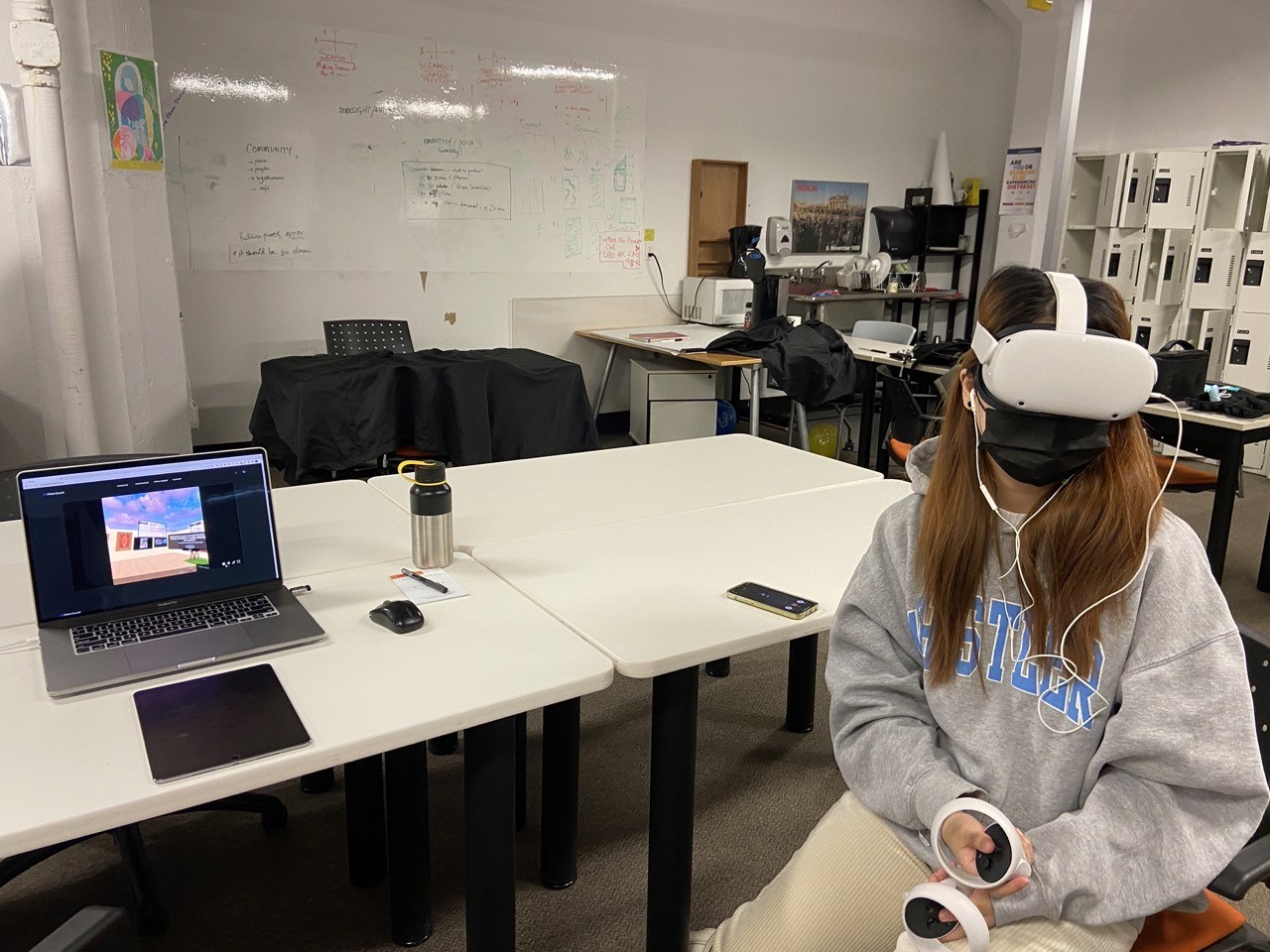
Using Research through Design, I reviewed literature and existing technologies, surveyed communication needs, and designed and evaluated four iterative mixed-reality prototypes. Prototype 3 was tested with six transnational family pairs—12 participants in total—with one family member in Toronto and the other overseas. The study combined observations from live paired activities, interviews, and online surveys to evaluate usability, usefulness, and social presence. The testing process was reviewed and approved by OCAD University’s Research Ethics Board and adheres to the guidelines of the TCPS2 (2nd edition of Tri-Council Policy Statement: Ethical Conduct for Research Involving Humans).
Iteration
Four prototypes, one learning loop
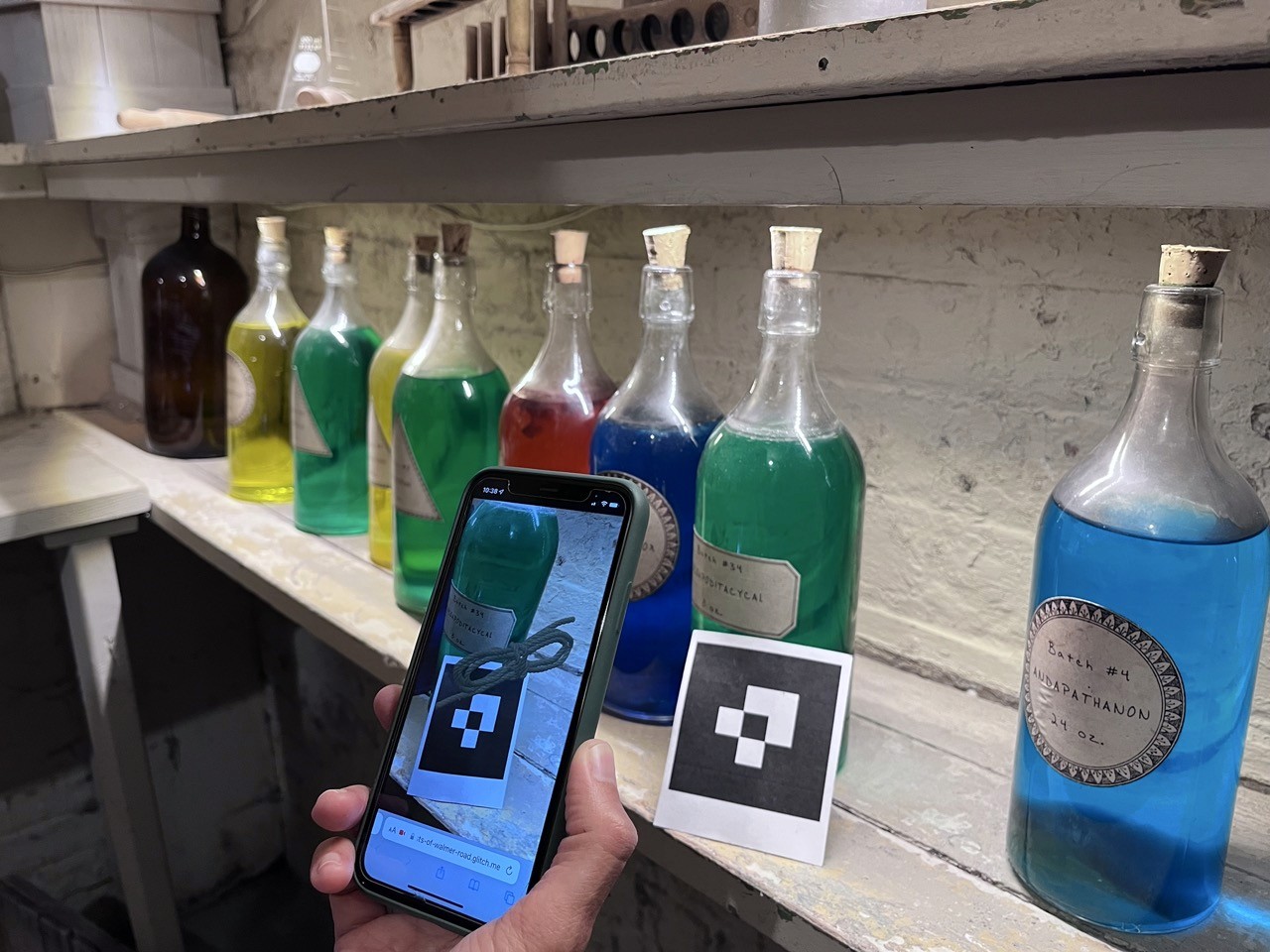
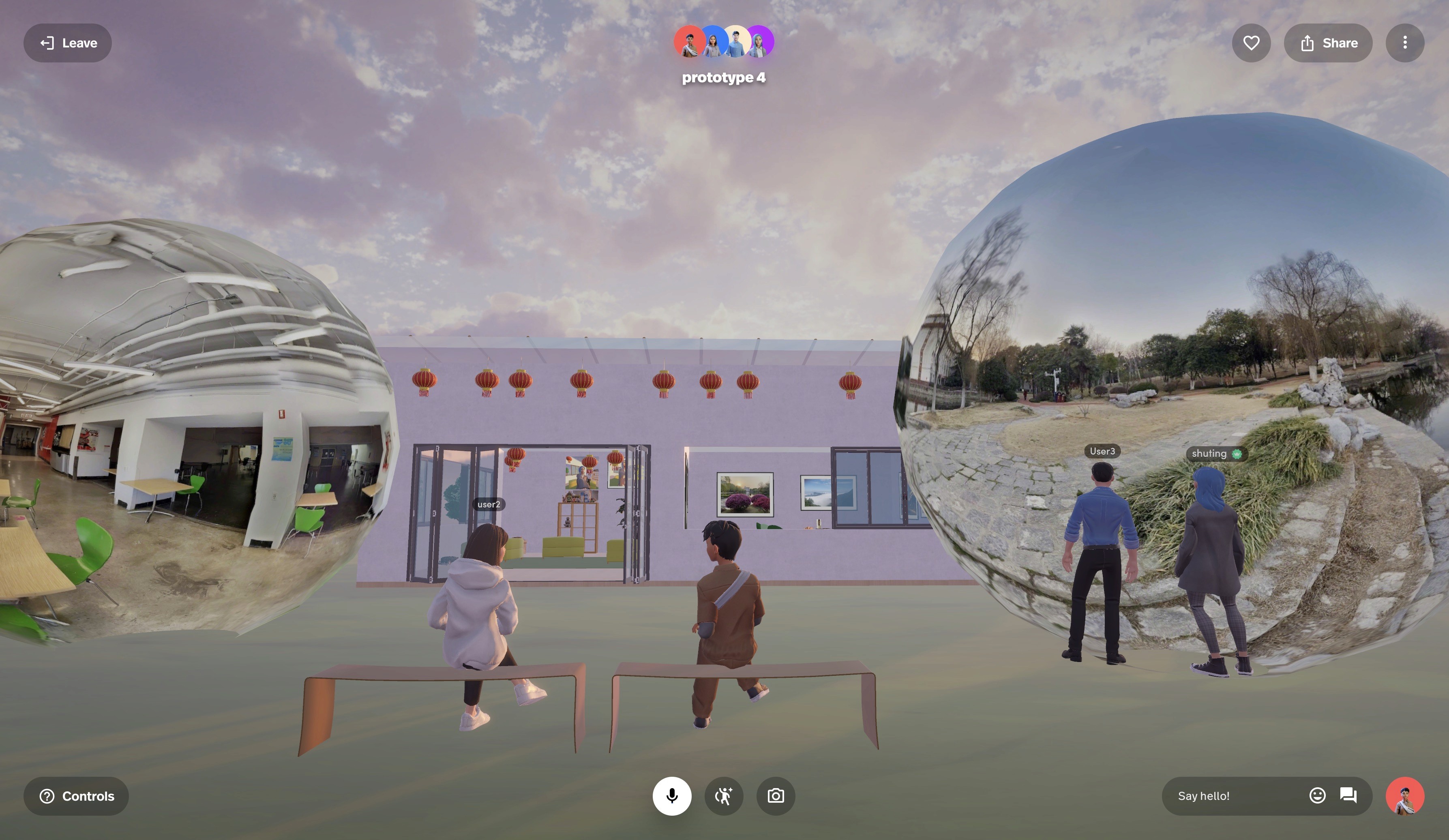
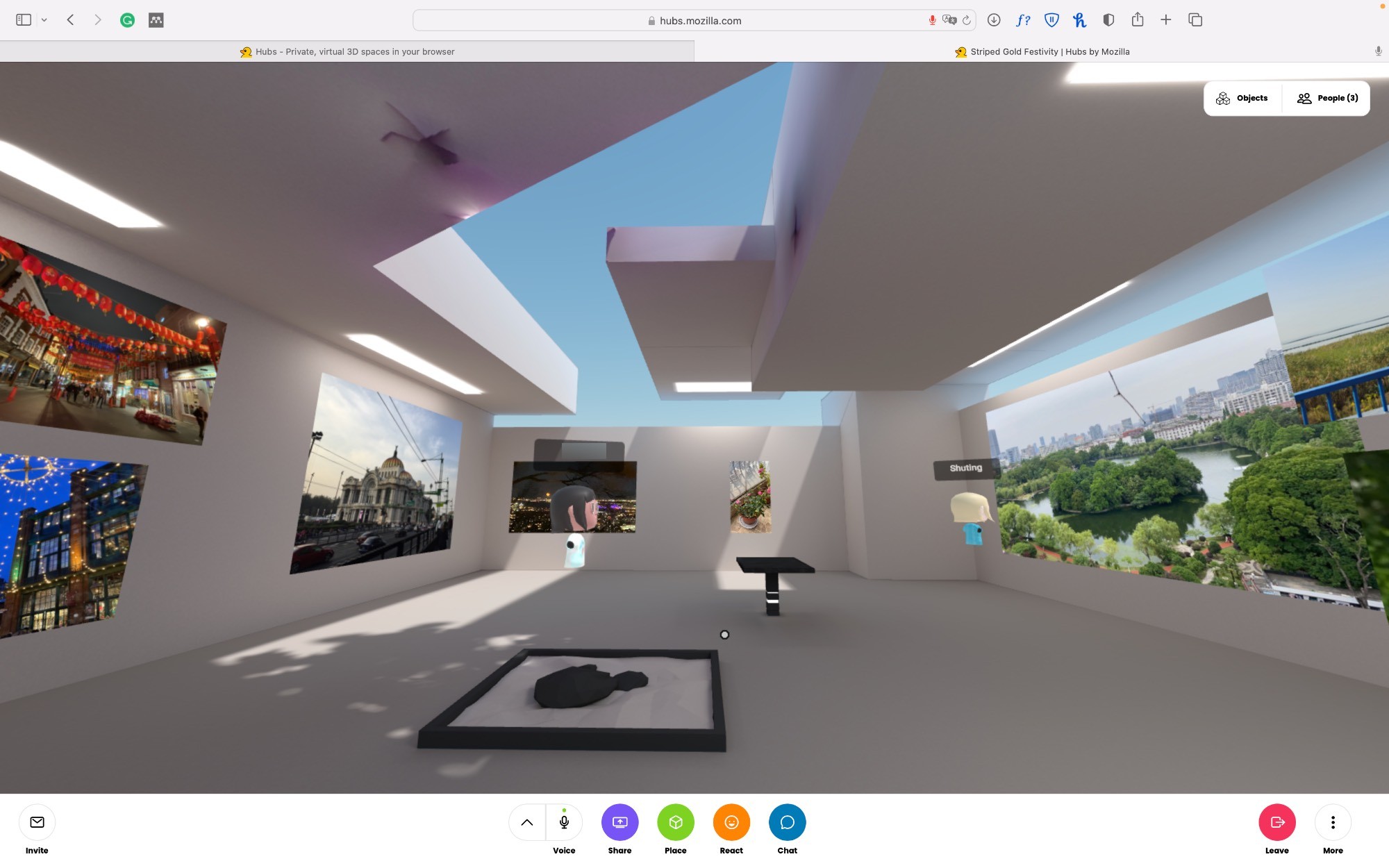
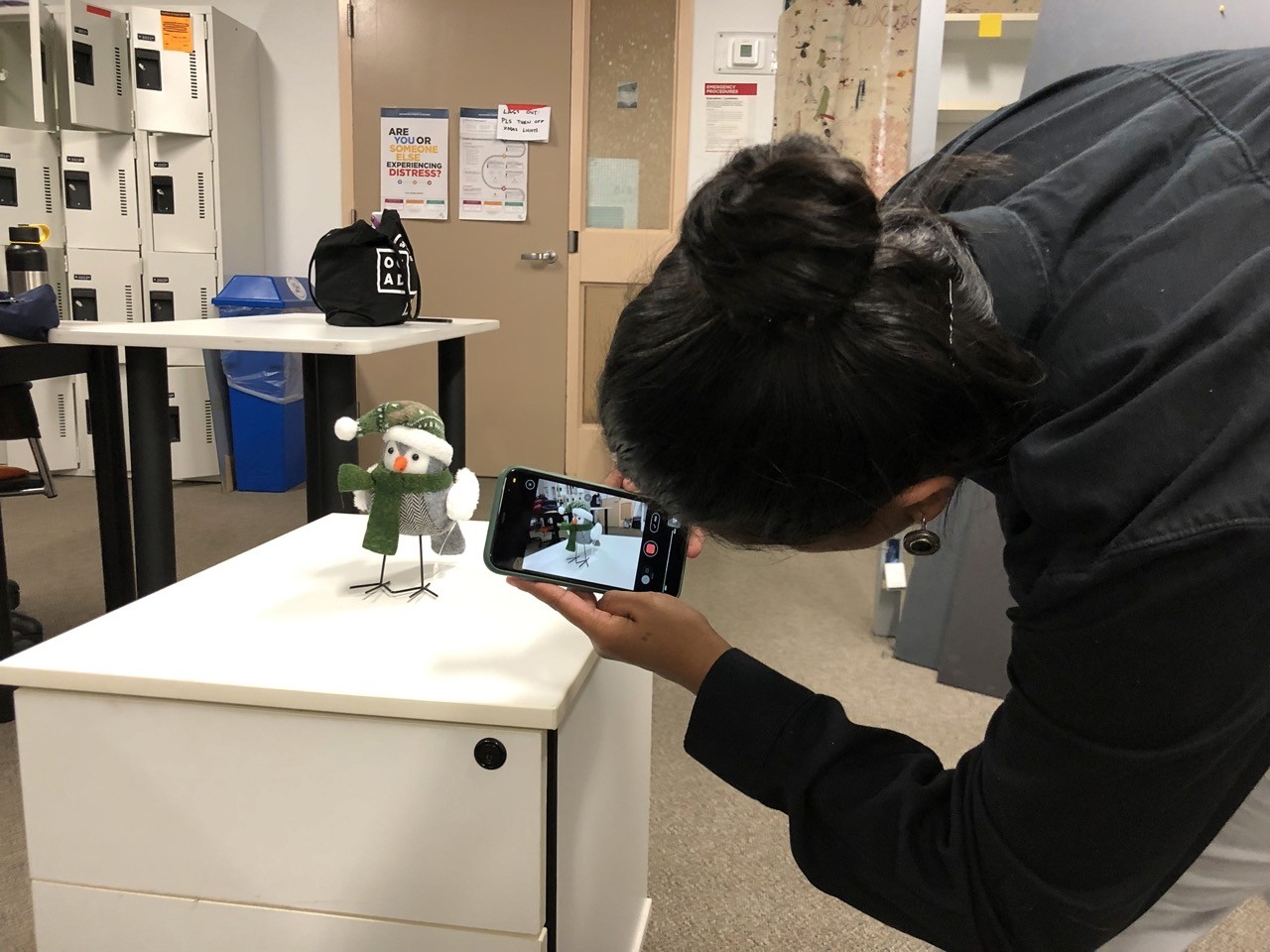
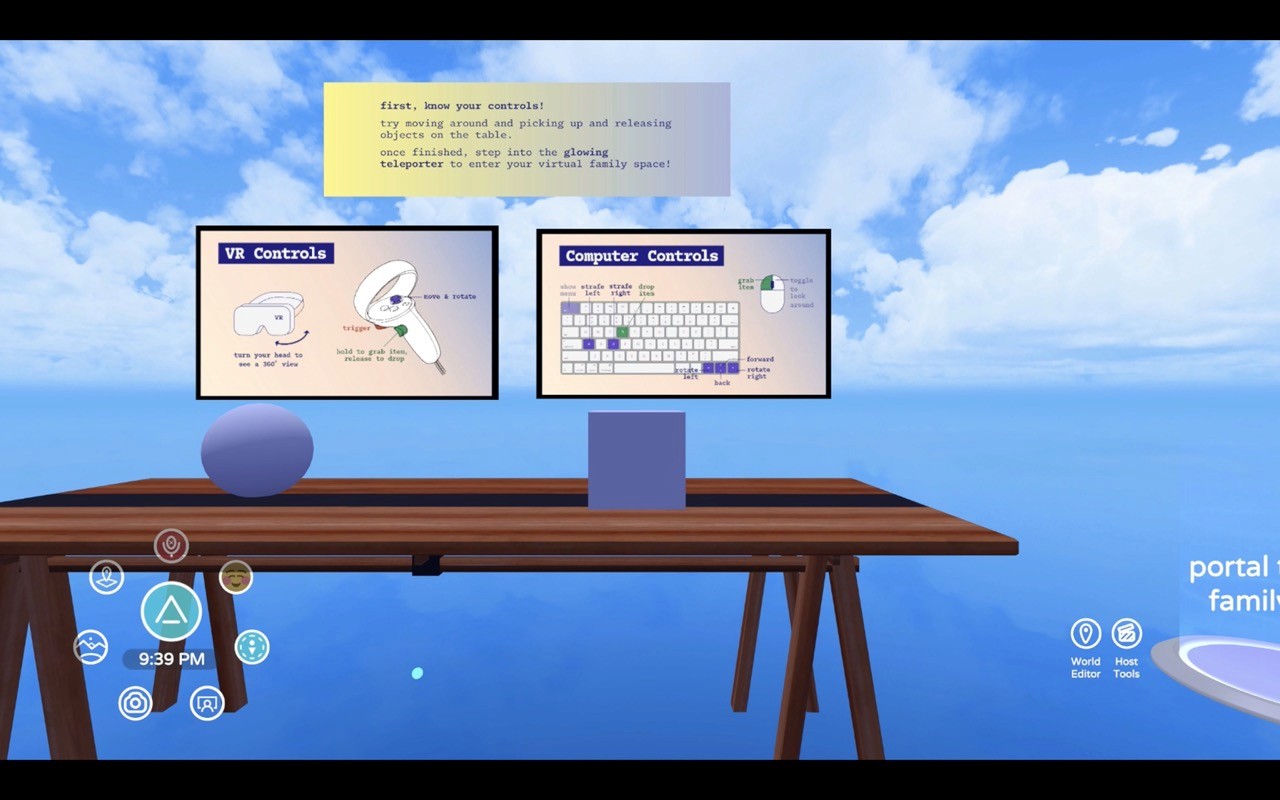
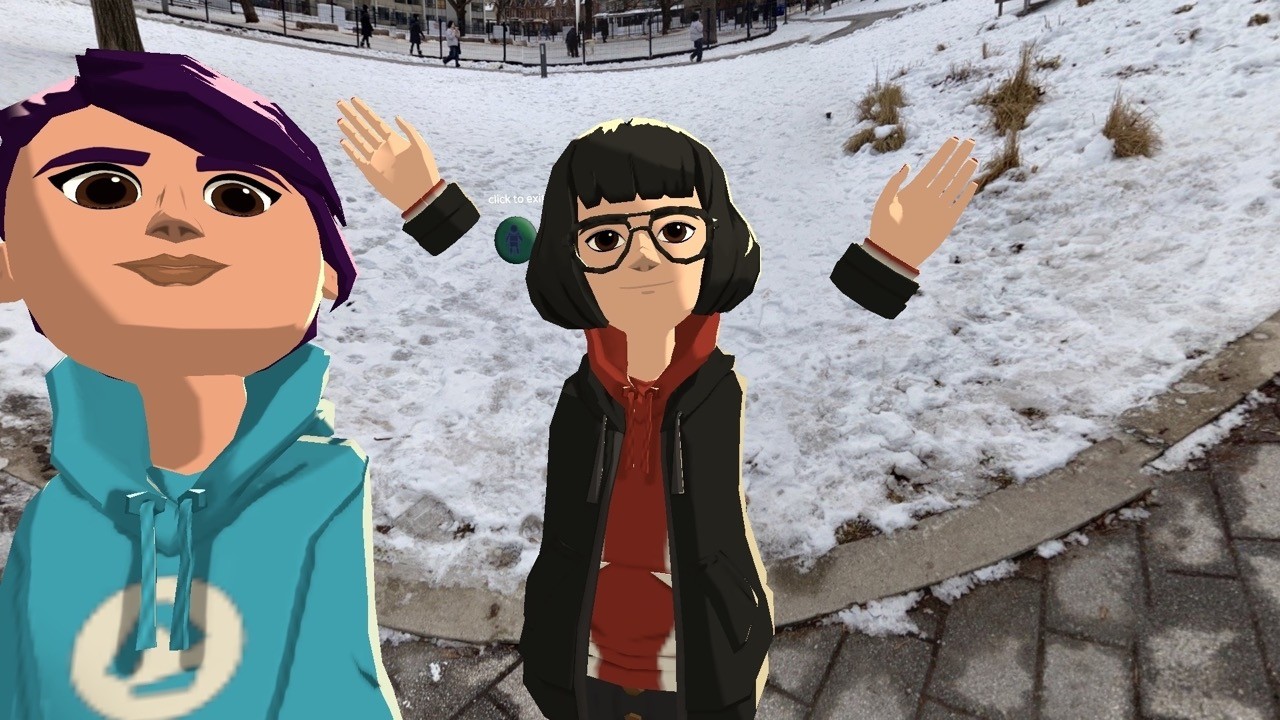
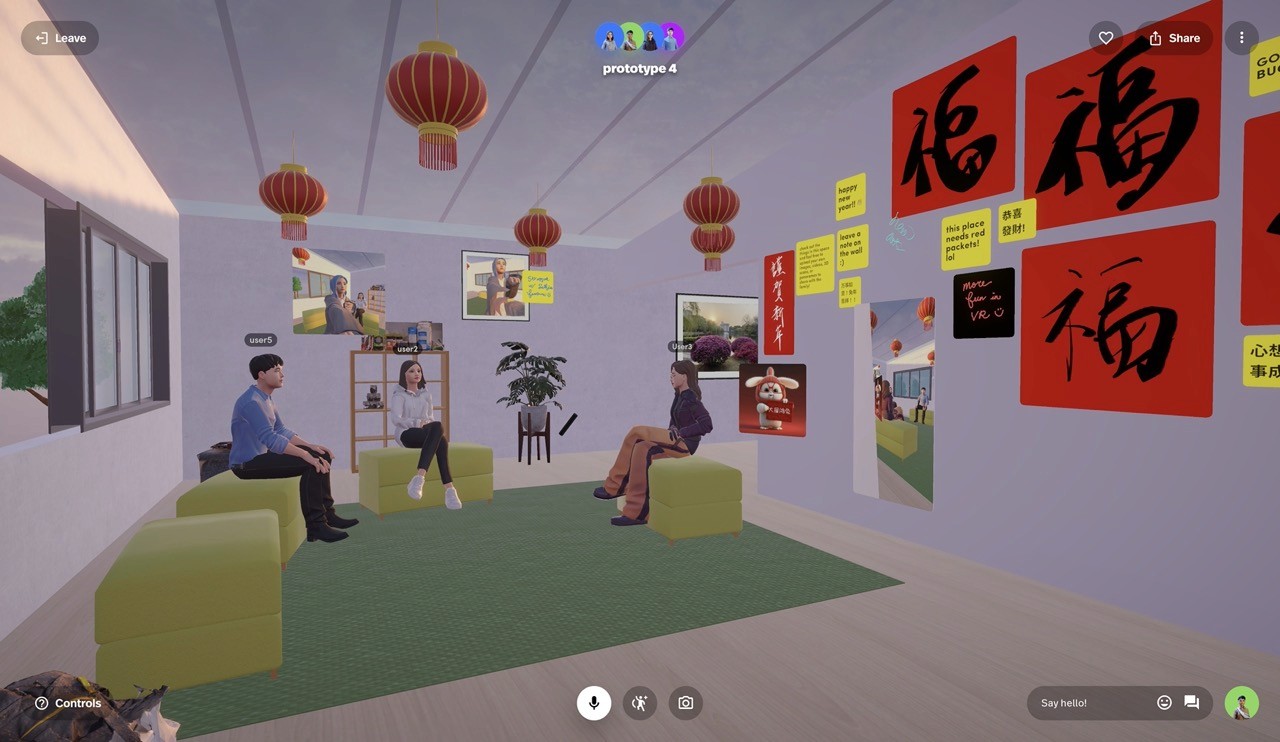
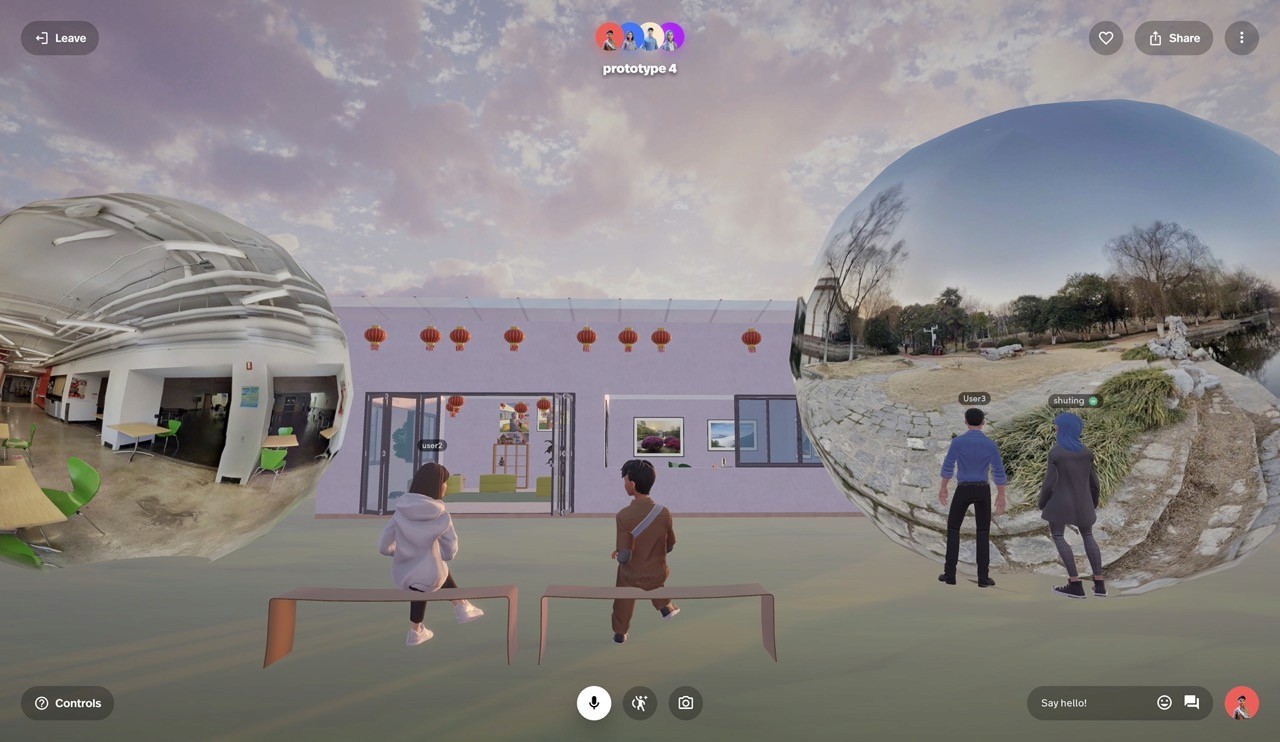
Prototype 1 explored sharing 2D images and videos in a shared 3D space, testing the effects of spatial reference and avatar embodiment. Prototype 2 introduced 3D-scanned objects, 360° photographs, and a home-like environment. Prototype 3 became a paired-testing space where first-time users completed guided activities using a VR headset and a computer. Prototype 4 explored a long-term, lived-in family space shared by five users over one week.
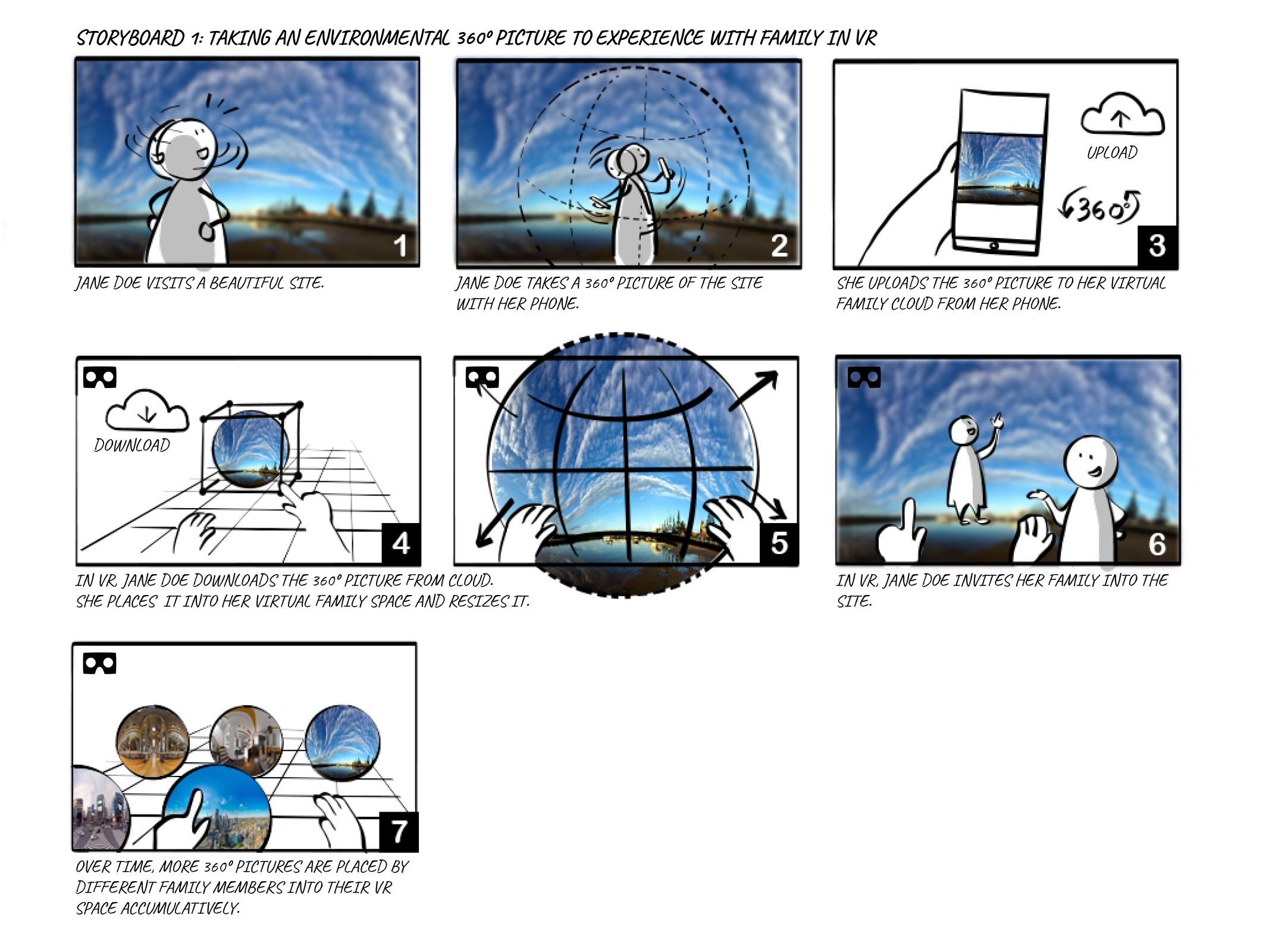
The gallery below first shows the storyboard from asset creation to co-exploration, and then traces the progression from 2D media sharing, to 3D and 360° assets, and finally to paired testing with participant-created media across VR and desktop devices.






Findings
What the research revealed
Shared spatial references, avatars, and spatial audio made communication feel more precise and increased participants’ awareness of one another. Three-dimensional scans of domestic objects carried personal memories and contributed to a stronger sense of home than 2D media alone. Testing also exposed differences between devices: VR users often became active guides, while computer users faced more navigation and setup barriers. These findings pointed toward flexible device access, home-like spaces with different activity zones, equal family ownership, and simpler tools for creating and sharing assets.
Design Response
From a virtual space to a shared virtual home
Prototype 4 translated the research findings into a more flexible family environment. It included one room for collaborative activities, another for meetings and conversations, and an open area for 360° photographs and shared viewing. Family members could contribute and arrange their own assets instead of entering a space controlled by one administrator. As domestic objects and family rituals accumulated over time, the space developed greater familiarity, peripheral awareness, and social presence.
The existing creation process required several disconnected tools, including Polycam, Google Street View, Blender, Photoshop, Unity, and platform-specific upload systems. This complexity led to the proposal for an all-in-one journey that would simplify asset capture, optimization, uploading, and collaborative world-building.


Outcome
Contribution and limitations
The research suggests that mixed reality can support social presence when a family space is collaborative, customizable, interactive, and used long enough to become familiar. The project produced four functional prototypes, a design and evaluation framework, and a paired-testing strategy for immersive communication experiences. It was not a finished commercial product: the 10-month solo study, 12-participant sample, device and network differences, and changing technology platforms limited its scope. Future work would require longer-term testing, simpler onboarding, and a more resilient asset workflow.